
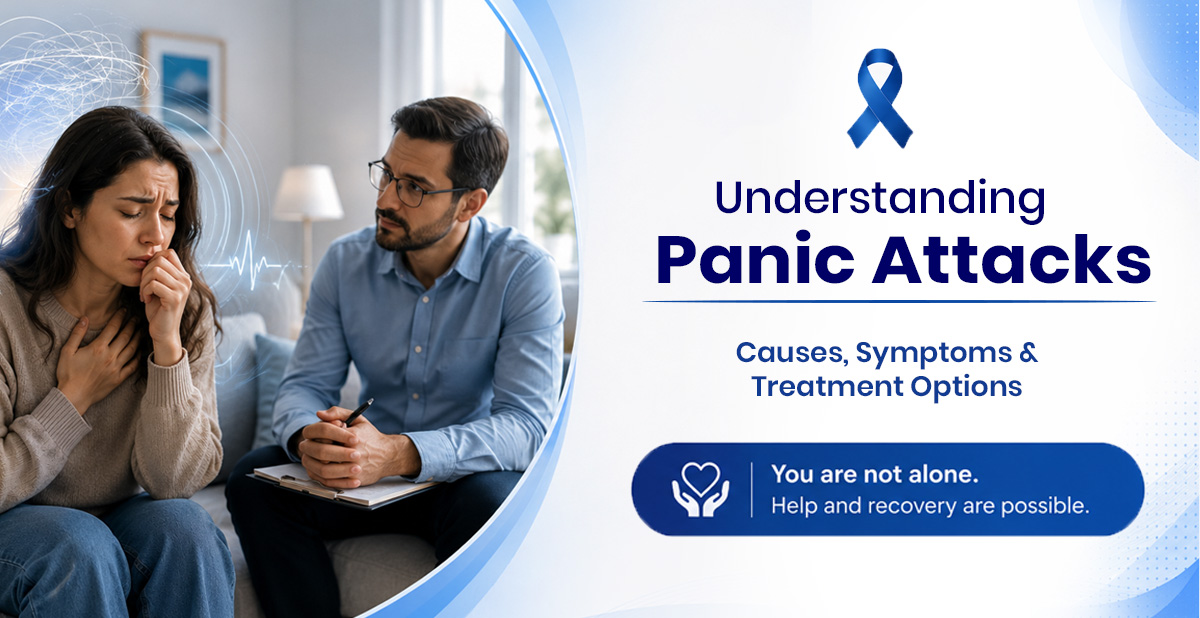
Understanding Causes and Treatment of Panic Attacks
Imagine you’re sitting at your desk or driving on an ordinary afternoon, and suddenly your heart starts racing. Your chest feels tight and you struggle to catch your breath. There is a sudden fear that washes over you so intense that you wonder if you’re having a heart attack. And within minutes, the feeling becomes so overpowering that it leaves you confused, threatened, and desperate for it to stop. And while you are imagining this, there are people out there who might be experiencing it. Most people assume this feeling is stress, but this is beyond mere stress. It is a panic attack.
A panic attack is one of the most unexpected events that doesn’t happen during moments of obvious danger or high pressure. It could occur anytime. Maybe even when you are just performing your routine activities. However, the experience is so intense that people feel convinced that something is seriously wrong and they need medical care.
A panic attack is not a sign of weakness and you must not feel embarrassed.
Panic attacks are far more common than most people realize. Millions of people around the world experience them at some point in their lives. However, the affected people often feel misunderstood and embarrassed about what they are going through. The misconceptions that surround them make them feel isolated. But the truth is that experiencing a panic attack is not a weakness. It’s a real and powerful response that involves both body and mind. If you or someone in your loved ones has experienced a panic attack before, then it’s very important to understand why it happens, what the symptoms are, and the effective treatment options.
What is a panic attack? Is it common?
A panic attack is a heightened feeling of fear and anxiety. The discomfort one feels causes the body to react physically. The physical reaction is so intense, as if it is designed to protect you from a physical threat, which in reality is not there. There is no actual danger but the attack activates the body’s fight or flight mode, increasing the heart rate, tensing the muscles and changing the breathing patterns. The most concerning thing about a panic attack is the physical intensity of the experience in the absence of real danger.
However, you must know that a panic attack is not uncommon. Several people experience one or two in their lifetime and often during periods of extreme stress, and never experience another. But when panic attacks become a frequent thing, it is diagnosed as panic disorder. Panic disorder often affects how the person lives. The fear of having another panic attack makes them avoid activities, places or situations that could trigger the condition. This is where anxiety management becomes important.
Understanding the Common Causes of Panic Attacks
If you’ve ever experienced a panic attack, you might wonder what caused it. Well, you must know that there is no one specific reason for a panic attack. There are multiple factors that cause it. The cause could be a major life-changing event, any family history, excessive negative thinking, or any traumatic experiences.
- Stress and Major Life Changes
One of the most common causes for panic attacks is long-term stress. Disturbed relations, financial stress, work-related stress, or loss of someone close could be various reasons for the stress. And when this stress goes on for a long period, it makes you vulnerable to experience panic attack.
- Family History
Do you have a family history where someone in your family experiences panic attacks? Although when you have a family history, it doesn’t mean you will end up experiencing it. It increases the possibility of occurrence.
- Traumatic or Difficult Experiences
Individuals who have previously experienced any traumatic event, such as an accident, abuse or a natural disaster, are again more likely to experience a panic attack. When events are so traumatic, they leave long-term emotional effects. As a result, even after the passage of years, certain situations, places, or memories may trigger feelings of fear and panic.
- Suppressed Emotions
Sometimes, panic attacks occur when emotions have been pushed aside for too long. When you constantly suppress your feelings, such as sadness, anger, or fear, it can create emotional overload. And when the mind can no longer cope with the pressure, it may express that distress through a panic attack.
Where to Seek Help for Anxiety Management and Panic Attack Treatment?
Panic attacks are manageable and with the right healthcare guidance and support, you can cope with them. However, there are various self-help techniques that you must know. These techniques may not stop panic attacks overnight, but they can reduce their intensity and frequency over time. This includes focusing on your breathing, reminding yourself that the feeling will pass, learning and identifying your patterns and triggers, and most importantly, practicing grounding techniques.
However, for professional care and treatment, you must approach mental health professionals. Although self-help strategies can be valuable, professional support is often an important part of recovery, especially if panic attacks are frequent, severe, or affecting daily life.
Individuals seeking panic attack treatment in Amritsar can book an appointment with us at Devki Neuropsychiatry in Amritsar. Schedule your appointment today.