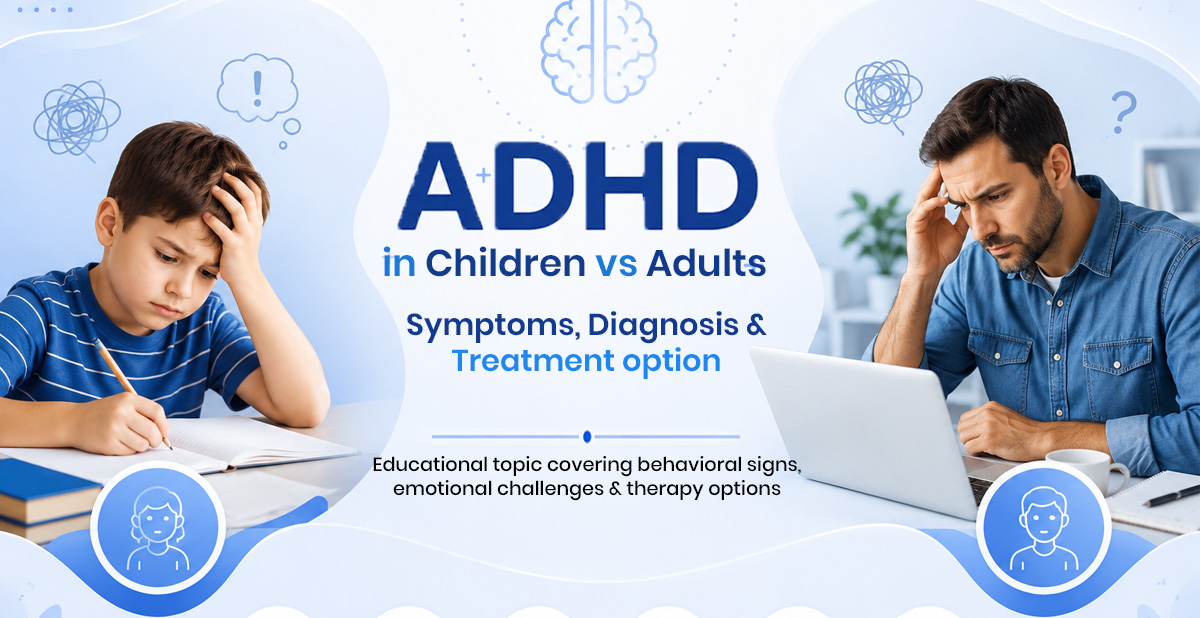
ADHD in Children vs Adults: Symptoms, Diagnosis & Treatment Options
Attention-Deficit/Hyperactivity Disorder (ADHD) is one of the most commonly discussed neurodevelopmental conditions today — yet it is still widely misunderstood. Many people associate ADHD only with hyperactive children, but the condition can affect both children and adults in very different ways.
From difficulty focusing in school to struggling with work deadlines, emotional regulation, impulsive decisions, and relationship challenges, ADHD can impact multiple aspects of life if left unrecognized or untreated.
The good news is that awareness around ADHD Symptoms and Treatment has grown significantly in recent years. With early diagnosis, proper therapy, lifestyle support, and medical guidance, individuals with ADHD can successfully manage symptoms and thrive in daily life.
In this blog, we’ll explore the differences between ADHD in Children and adults, common behavioral and emotional signs, diagnostic methods, and the most effective treatment options available today.
What Is ADHD?
ADHD (Attention-Deficit/Hyperactivity Disorder) is a neurological condition that affects attention, impulse control, and activity levels.
People with ADHD may experience difficulties with:
- Concentration
- Organization
- Time management
- Emotional regulation
- Impulsivity
- Hyperactivity
ADHD is not caused by laziness, poor parenting, or lack of discipline. It is a medically recognized condition linked to differences in brain development and functioning.
Types of ADHD
ADHD is generally categorized into three main types:
1. Predominantly Inattentive Type
This type mainly affects focus and concentration.
Common signs include:
- Easily distracted
- Forgetfulness
- Difficulty following instructions
- Losing items frequently
- Trouble completing tasks
2. Predominantly Hyperactive-Impulsive Type
This type is more associated with excessive activity and impulsive behavior.
Symptoms may include:
- Constant fidgeting
- Interrupting conversations
- Difficulty sitting still
- Talking excessively
- Acting without thinking
3. Combined Type
It’s the most common ADHD form that includes symptoms of both inattentiveness and hyperactivity.
ADHD in Children: Common Signs To Watch For
Recognizing ADHD in Children can sometimes be challenging because many young children naturally display energetic or distracted behavior. However, ADHD symptoms are usually persistent, more intense, and interfere with daily functioning.
Behavioral Symptoms in Children
Children with ADHD may:
- Struggle to focus in class
- Frequently daydream
- Have difficulty following instructions
- Avoid tasks requiring concentration
- Make careless mistakes in schoolwork
- Lose books, pencils, or homework regularly
Hyperactive symptoms may include:
- Constant movement or restlessness
- Running or climbing excessively
- Difficulty staying seated
- Talking nonstop
- Interrupting others frequently
Emotional Challenges in Children With ADHD
ADHD is not just about attention problems. Many children also experience emotional difficulties.
These may include:
- Low self-esteem
- Frustration with academics
- Difficulty managing emotions
- Mood swings
- Social struggles with peers
- Sensitivity to criticism
When symptoms are unnoticed, kids start believing as if they are “bad,” “lazy,” or “not smart enough,” which can affect mental well-being over time.
ADHD Symptoms in Adults Often Look Different
Many adults with ADHD were never diagnosed during childhood. In fact, awareness around Adult ADHD Diagnosis has increased significantly because symptoms can continue into adulthood in less obvious ways.
Adults may not appear hyperactive physically, but they often experience internal restlessness and chronic disorganization.
Common Symptoms of ADHD in Adults
Adults with ADHD may struggle with:
- Difficulty concentrating at work
- Poor time management
- Forgetfulness
- Procrastination
- Impulsive decision-making
- Trouble completing projects
- Frequent distractions
- Relationship challenges
- Emotional overwhelm
Some adults describe their minds as constantly “busy” or racing with thoughts.
Emotional Impact of Adult ADHD
Undiagnosed ADHD in adults can affect confidence, careers, finances, and relationships.
Many adults experience:
- Anxiety and stress
- Low self-esteem
- Burnout
- Emotional impulsivity
- Difficulty regulating frustration
- Chronic feelings of underachievement
Because ADHD symptoms can overlap with anxiety or depression, many adults are initially misdiagnosed before receiving a proper ADHD evaluation.
How ADHD Is Diagnosed
There is scaning or blood test that can diagnose ADHD. Diagnosis usually involves a detailed behavioral and psychological assessment.
ADHD Diagnosis in Children
For children, healthcare professionals may gather information from:
- Parents
- Teachers
- School reports
- Behavioral observations
- Developmental history
Symptoms generally need to be present for at least six months and affect more than one setting, such as home and school.
Adult ADHD Diagnosis
An Adult ADHD Diagnosis often includes:
- Clinical interviews
- Symptom questionnaires
- Childhood behavioral history
- Assessment of work and relationship challenges
- Screening for anxiety, depression, or learning disorders
Many adults realize they may have ADHD after noticing similar symptoms in their children.
ADHD Symptoms Often Overlap With Other Conditions
ADHD can sometimes coexist with other mental health or learning conditions, including:
- Anxiety disorders
- Depression
- Autism spectrum disorder
- Learning disabilities
- Sleep disorders
- Oppositional behaviors
ADHD Symptoms and Treatment: What Are the Options?
Treatment plans vary depending on age, symptom severity, and individual needs.
Behavioral Therapy for ADHD
Behavioral therapy helps individuals develop practical coping strategies.
For Children
Therapy may focus on:
- Building routines
- Improving focus
- Reward-based behavior systems
- Social skills development
- Emotional regulation
Parent training programs can also help caregivers better support children with ADHD.
Therapy for Adults With ADHD
Adults may benefit from:
- Cognitive Behavioral Therapy (CBT)
- Time management coaching
- Organization techniques
- Stress management
- Emotional regulation strategies
Therapy can help adults improve productivity, relationships, and self-confidence.
Medication for ADHD
Medication is used to manage ADHD symptoms and improve concentration and impulse control.
Common categories include:
- Stimulant medications
- Non-stimulant medications
Not everyone with ADHD requires medication, but for many individuals, it can significantly improve daily functioning.
Lifestyle Changes That Help Manage ADHD
Healthy habits can play a major role in symptom management.
Helpful lifestyle strategies include:
- Regular physical activity
- Consistent sleep schedules
- Healthy nutrition
- Limiting screen distractions
- Structured routines
- Mindfulness practices
Exercise, in particular, may help improve attention and emotional regulation.
ADHD and School Performance
Children with ADHD often face academic difficulties not because of intelligence, but because of focus and organization challenges.
Supportive strategies may include:
- Extra time during tests
- Breaking tasks into smaller steps
- Classroom seating adjustments
- Visual reminders and schedules
- Positive reinforcement
Early intervention can significantly improve educational outcomes.
ADHD in Relationships and Work Life
Adults with ADHD may struggle with:
- Forgetting commitments
- Interrupting conversations
- Emotional impulsiveness
- Difficulty managing responsibilities
However, many adults with ADHD also possess strengths such as:
- Creativity
- High energy
- Problem-solving skills
- Innovation
- Adaptability
With the right support, individuals with ADHD can excel personally and professionally.
When Should You Seek Professional Help?
It may be time to seek evaluation if symptoms:
- Interfere with school or work performance
- Affect relationships
- Cause emotional distress
- Lead to chronic disorganization or impulsivity
- Persist over time
Early diagnosis and intervention can improve long-term wellbeing and quality of life.
Final Thoughts
Understanding the differences between ADHD in Children and adults is essential for early recognition and effective support. While children may show visible hyperactivity and classroom difficulties, adults often experience internal restlessness, emotional overwhelm, and organizational struggles.
The encouraging reality is that modern approaches to ADHD Symptoms and Treatment offer multiple ways to manage symptoms successfully. Through therapy, behavioral support, lifestyle changes, and professional care, both children and adults with ADHD can build confidence, improve focus, and lead fulfilling lives.
As awareness continues to grow, more individuals are finally receiving the understanding, diagnosis, and support they need — proving that ADHD is not a limitation, but a condition that can be managed with the right tools and guidance.